Kent is a beautiful English county in the Southeast corner of England and nestling between the hop fields of Kent and the Thames Estuary is Faversham, the family home of Arthur Osborne and his plaque making company.
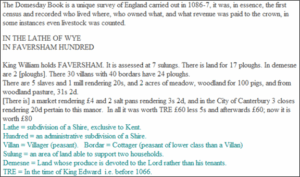
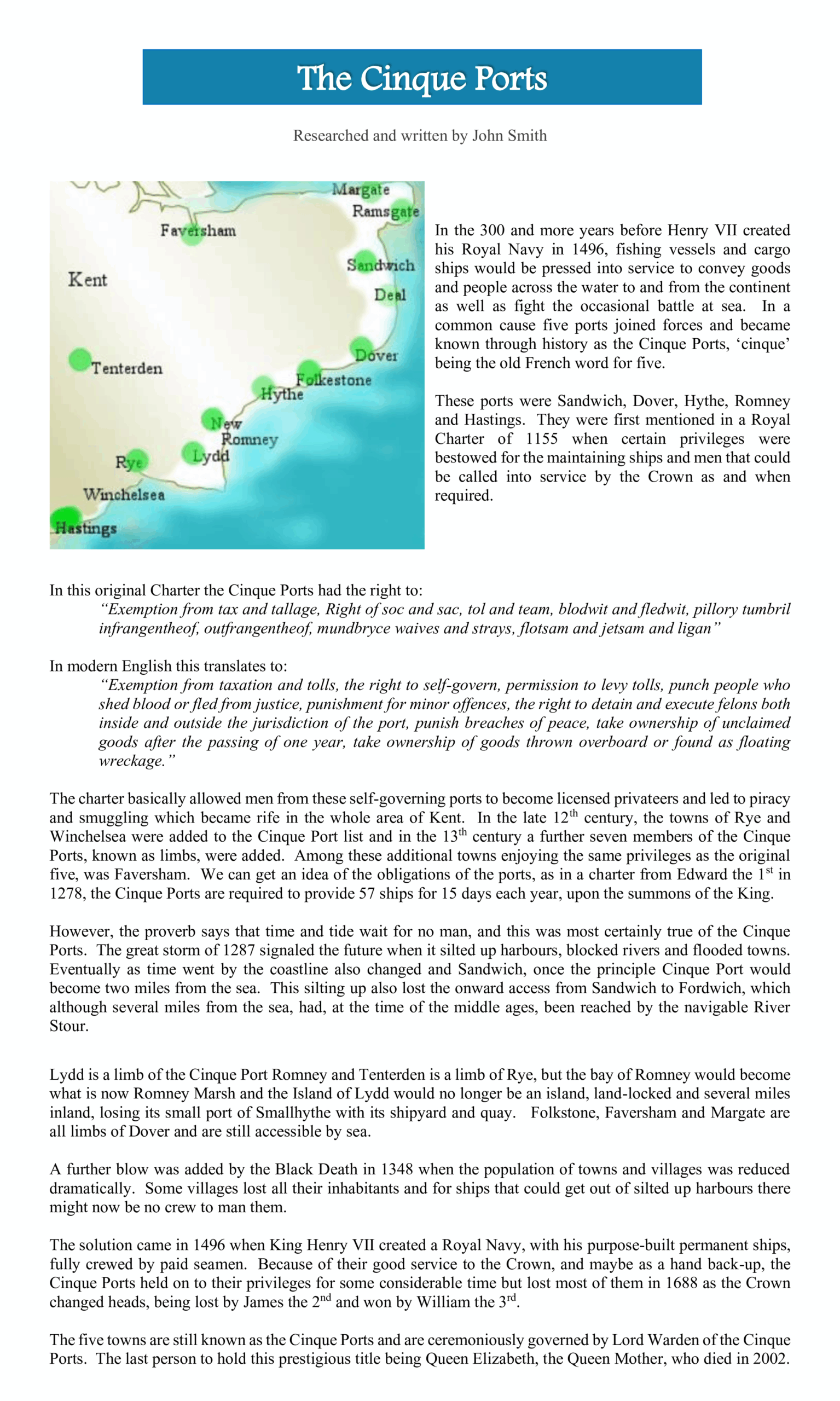
Faversham is an ancient place believed to have been established by settlement around 43AD after the Roman invasion but probably occupied even before then. It was known in 811 as ‘Fefresham’ when it was recorded in a Charter as The Kings Town, at other times as ‘Favreshant’ (when it was recorded in the Doomsday book in 1085) and also Feversham’, and although it never evolved into a City it has always been regarded with a great importance over the centuries.
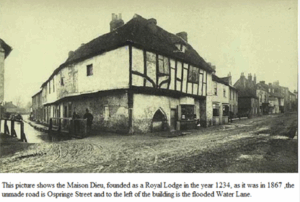
It is known that as far back as the 6th Century the Saxon King, Ethelbert, who reigned from 560 to 616 maintained a Royal residence there and since that time many Kings and Queens have either stayed in, or visited, the town on no fewer than 21 recorded occasions that span the years between King John in 1201 and King George in 1821. There were many other unrecorded visits prior to 1201. At least three Kings stayed overnight in the King’s Chamber of the Maison Dieu, built in the 13th Century as a Royal Lodge, a building that has now been fully restored and is open as a museum.
Over the years many important Charters were bestowed by Monarchs on Faversham, granting various privileges, liberties, freedoms and immunities, many of these charters were renewed by successive Monarchs and some were reinforced as and when required.
A good example of this is the Charter of Incorporation by King Henry the Eighth in 1546;
The government of Faversham has long been thought to belong to the Mayor and Jurats and lately to the Abbot but now that the incorporation has been found to be insufficiently based in law, the King wishes to incorporate the town anew for the benefit of the inhabitants.
The first Mayor, Jurats and Freemen, under the new incorporation are appointed, and the procedure is laid down for their election and replacement and for the appointment of a Serjeant-at-Mace. Various corporate privileges are granted, including a common seal, Portmoot Court, a market three times a week and on half-holidays and a fair in February and August.
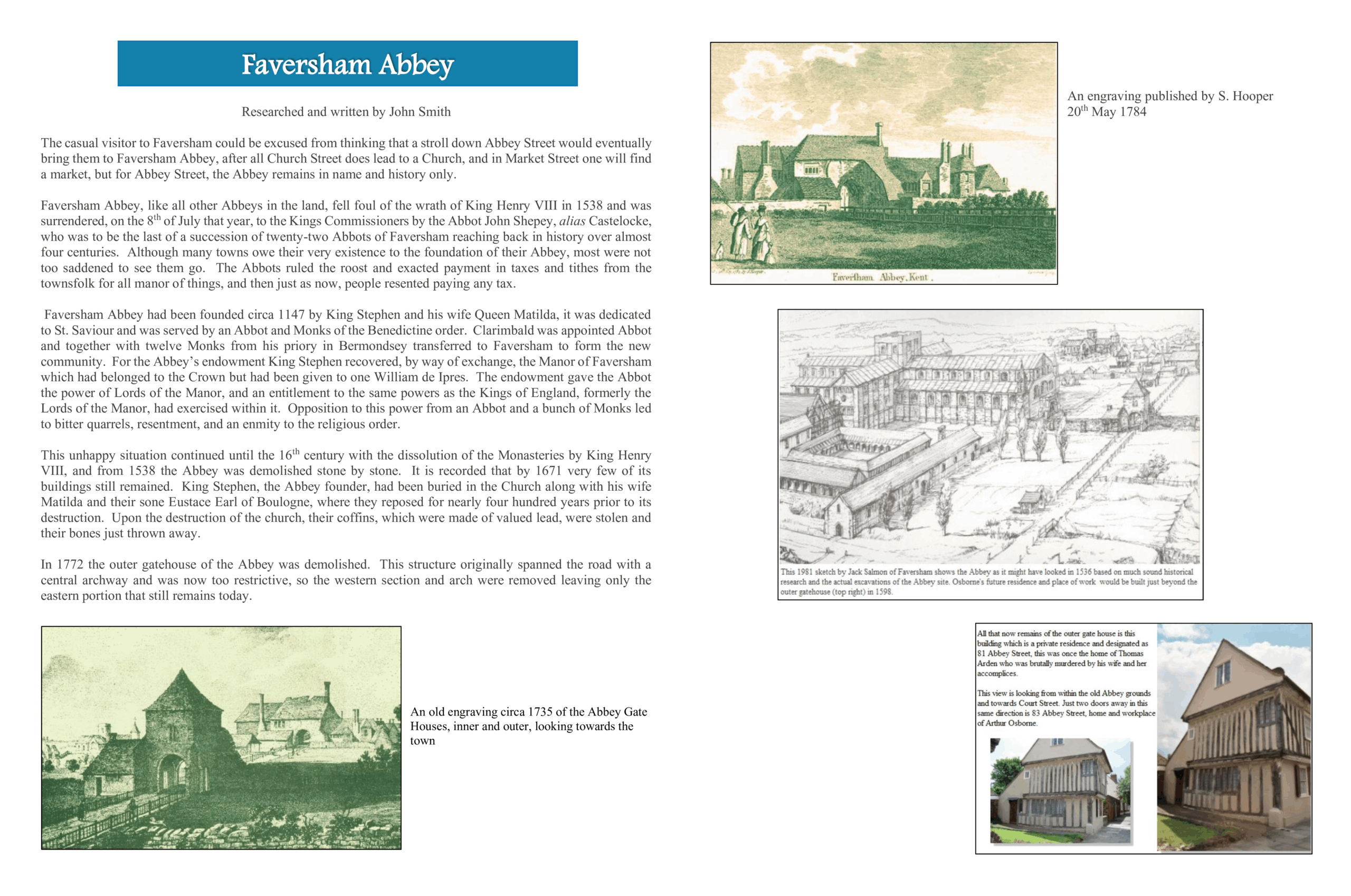
Faversham Abbey, from which Abbey Street got its name, founded by King Stephen 1135-1154 was dissolved and demolished in 1538, the Abbey gatehouses being lastly demolished in 1771-1772.
In 1648 the Borough supported the Protectorate and Oliver Cromwell who seized power in England in the year 1649, making country a Commonwealth until the restoration of the crown in 1660. One of Faversham’s later associations with Royalty was in the brief imprisonment of King James the 2nd in 1688, as he attempted to escape the advance of William and Mary, who were to win the crown and rule from 1689 to 1702.
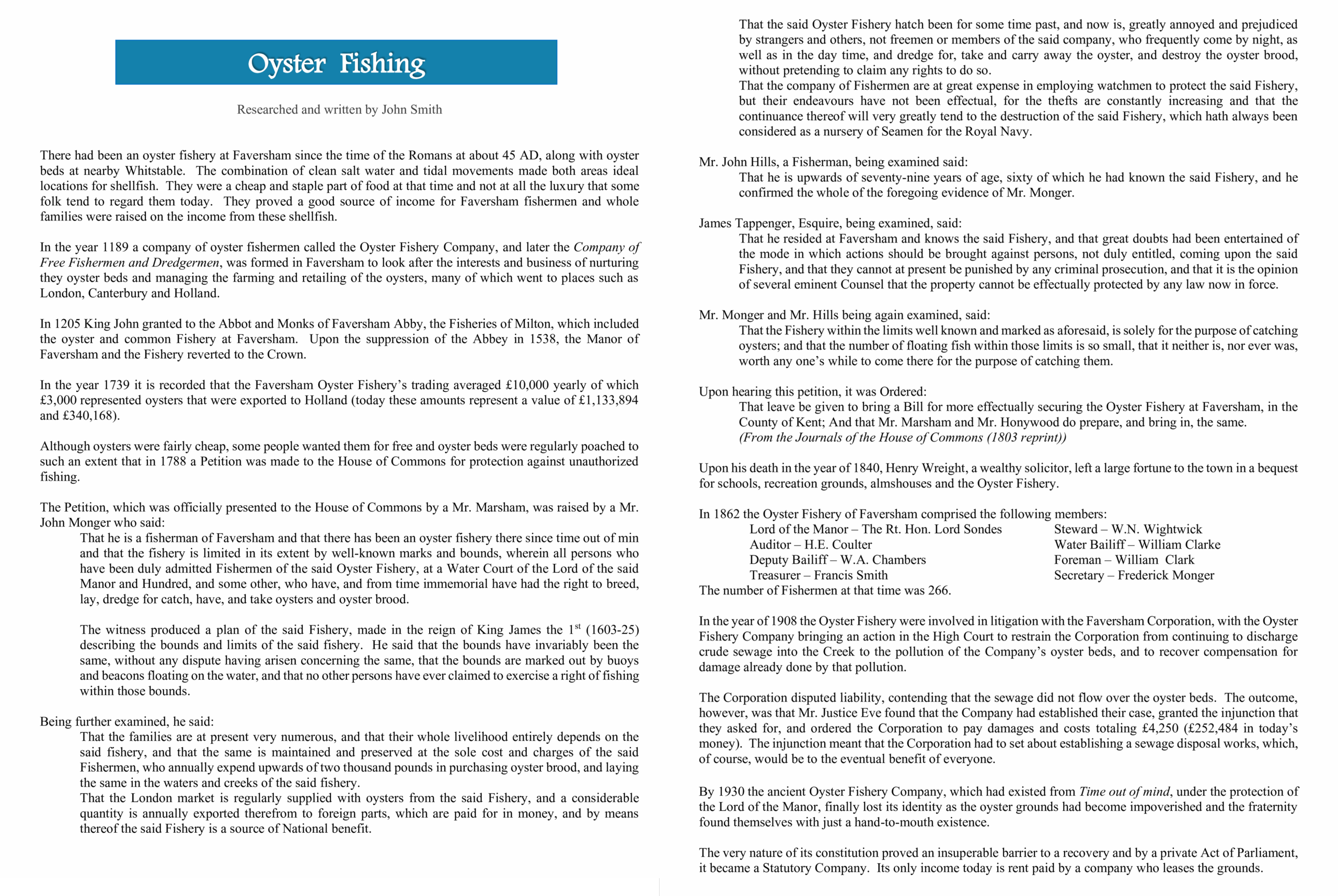
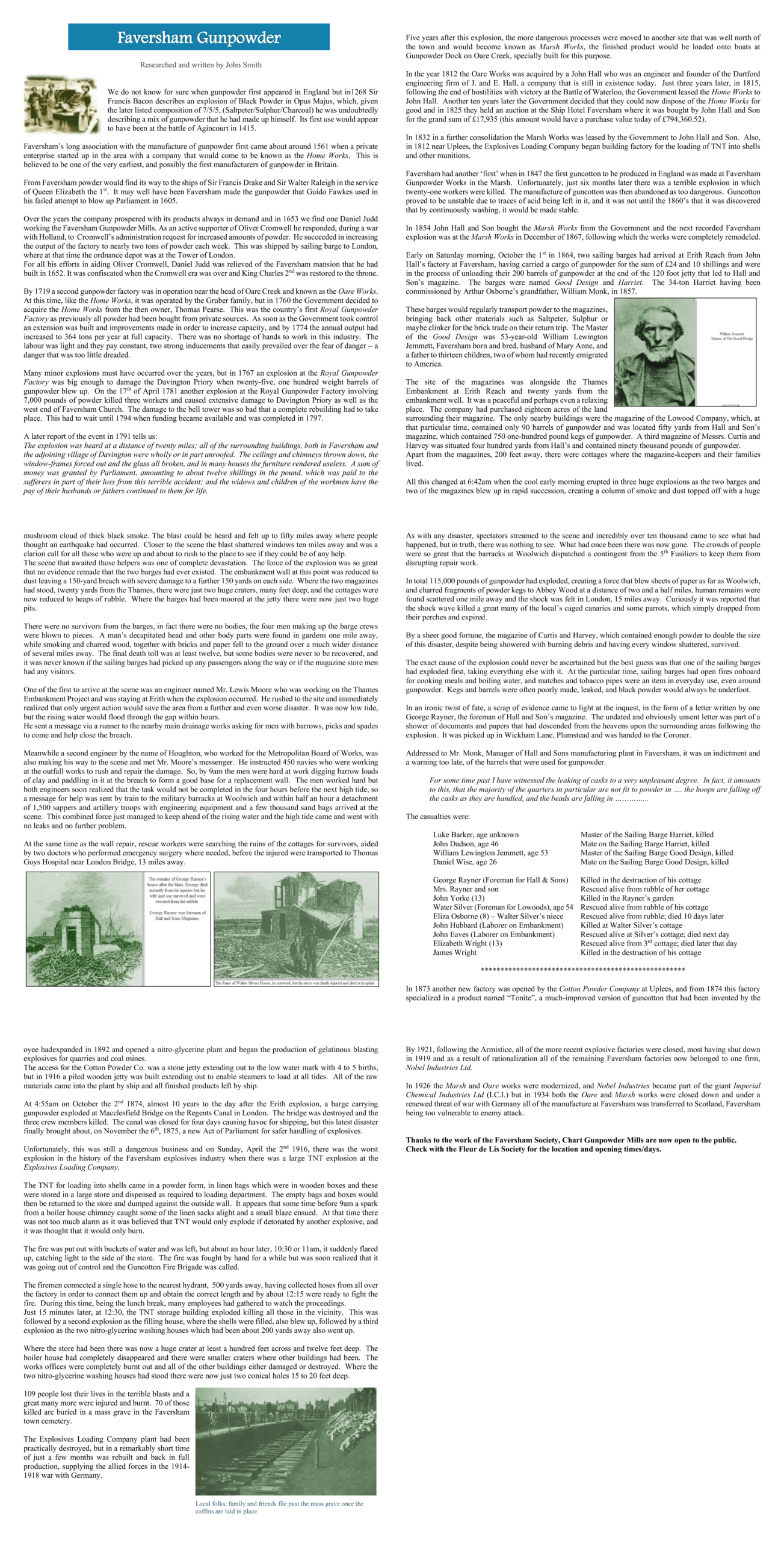
As well as being of great historical importance as the limb of a Cinque Port, Faversham developed and maintained a number of important industries including Ship Building and Cement Manufacture, there was Oyster Fishing which was founded in 1189, and the manufacture of Gun Powder which started in 1560 and supplied explosives for all of the nation’s battles and wars up until the second world war, there was the manufacture of Bricks when many large brick-fields opened up, and a more enduring enterprise was the brewing of beers with the famous Rigdens brewery opening in 1764 and the Shepherd Neame company, who started even earlier in 1698.
For some time, printing and bookselling also became a prime business flourishing in the Court Street area of the town.
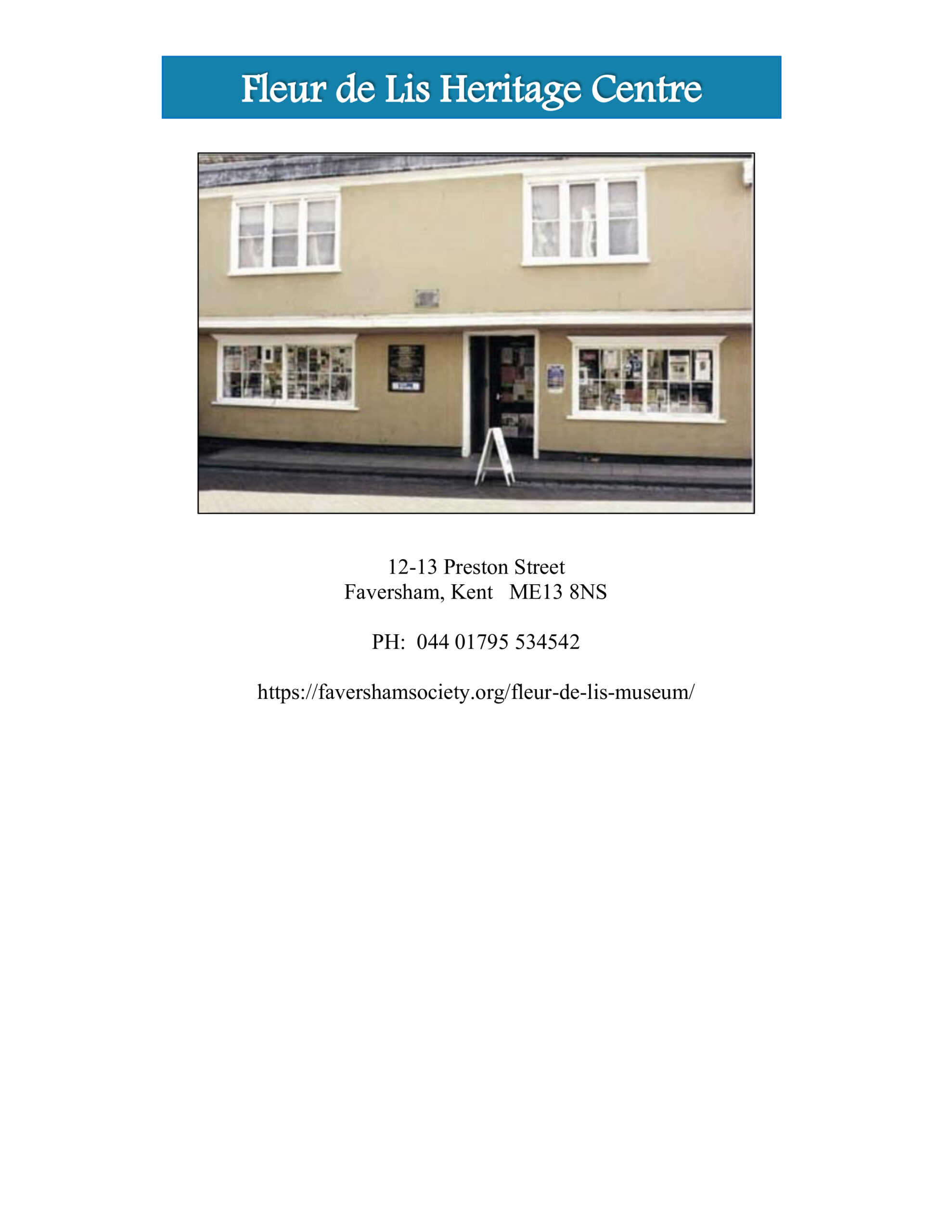
Situated in Preston Street at number 13, is the home of the Faversham Society, housed in the ancient Fleur de Lis Public House that is now the Fleur de Lis Heritage Centre, it was a popular inn for hundreds of years before being converted into a Heritage Centre in 1976/7, now an excellent place to answer your historical questions about Kent, and in particular Faversham, with some of the best local documentation to be found anywhere, thanks to the voluntary efforts of the society members.
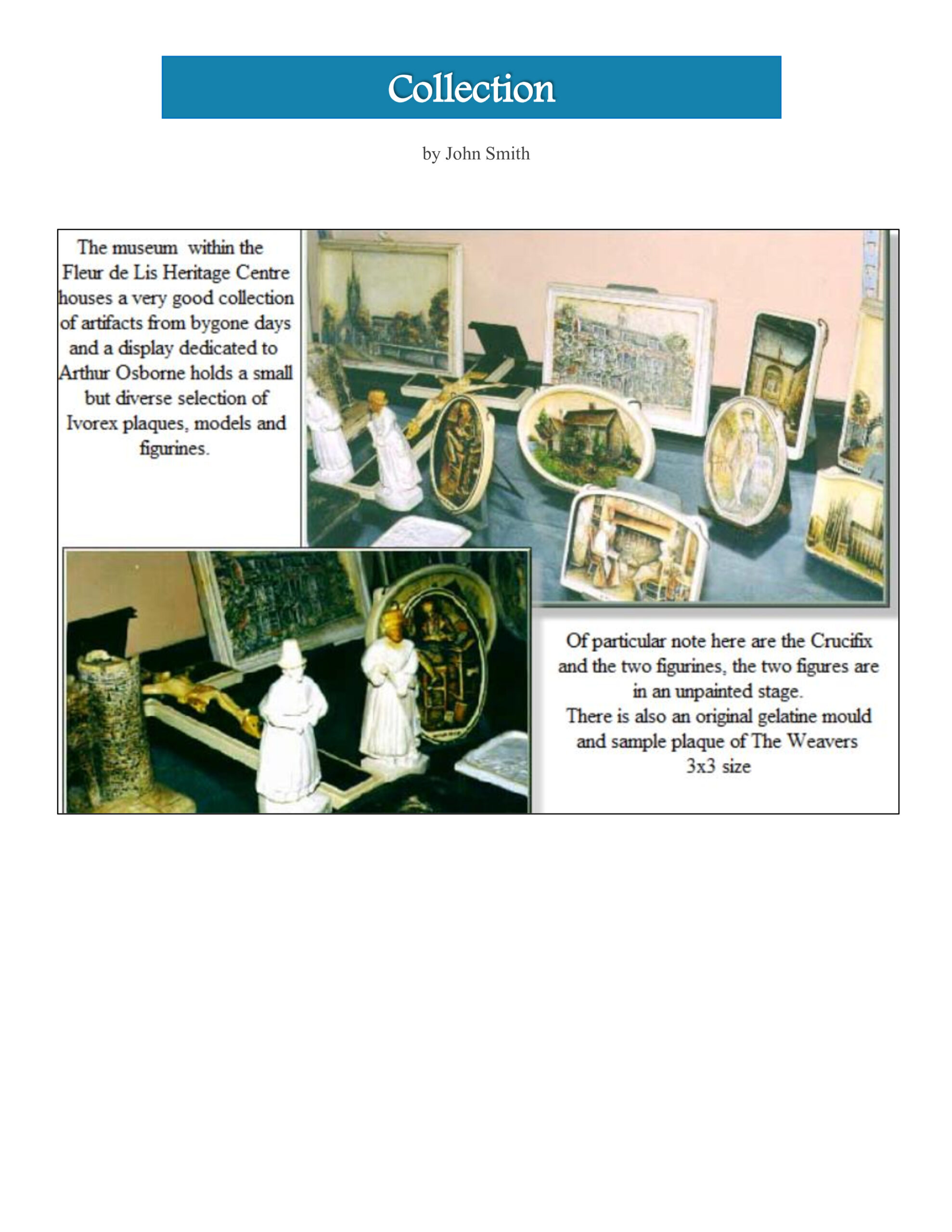
The museum within the centre has a good collection of Mr. Osborne’s work and is always looking for more donations. Particularly interesting is an original mould for the Weavers plaque and a Crucifix that was one of many made for the local Catholic Church.
Just down the road from the museum will be found Faversham Guildhall, depicted on an Osborne plaque, this building is at the top of Court Street, in Market Square, so a stroll down Court Street will bring you into Abbey Street and Osborne’s house and place of business at number 83, the house was fully restored in 1986 and is now a private residence. Just around the corner you will find Faversham Church, another scene that was well depicted by Mr Osborne on a plaque.